Showing posts with label private art classes. Show all posts

Sunday, 2 April 2017

Upcoming Private Art Courses - Spring & Summer 2017


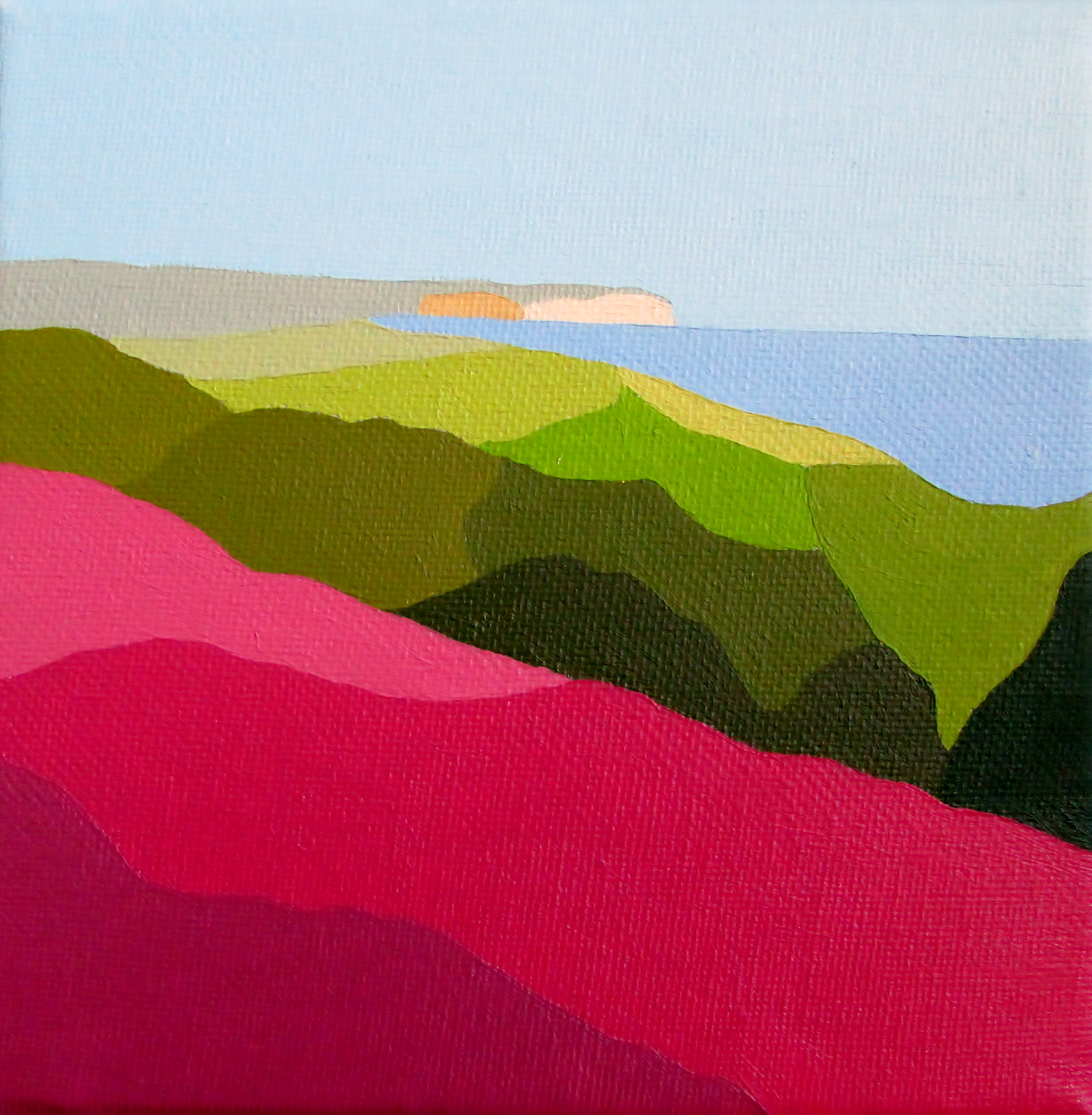
View of Shanklin beach from the Chine
I am really looking forward to the upcoming courses over the next few months.  Sunny days and painting go so well together.  If I am not teaching you can be sure to find me outside with my easel, paints and a canvas trying to capture the mood and atmosphere of this beautiful island!  The following is a list of my upcoming classes and I hope to see you there 🎨

4 Week Painting Course ‘Night-Skies & Night Landscapes’ (open medium) 
Friday 5th May 10.00 to 12.00pm, Northwood W.I Hall, £65.


4 Week Painting Course ‘Impressionist Figures & Portraits’ (open medium) 

Thursday 11th May 10.00 to 12.30pm, Bembridge Village Hall, £70.
A brief course outline - Looking at and discussing famous paintings on the subject - history and origins, Impressionist painting techniques, proportions of the human body and face, mixing various skin tones, scaling-up photograph’s and how to create a more successful portrait.


4 Week Painting Course ‘Painted Gardens’ (open medium) 
Friday 9th June 12.30 to 3pm, All Saints Church Hall, Ryde, £65.

A brief course outline - Looking at and discussing famous paintings on the subject - history of ‘Painted Gardens’, recap of mixing your own greens, how to create texture, drama and depth. You can choose to paint a stately garden like Mottistone Manor or your own beautiful back garden. You might wish to paint a cottage with a front garden or an exotic botanical garden.


 1 Day (3.5hrs) ‘Painting & Sketching at Shanklin Chine’
Friday 14th July 10 to 1.30 pm at Shanklin Chine, £40 (entrance fee not included).

 A chance to paint, sketch and take photo’s inside the beautiful and naturally formed Shanklin Chine. As well as the natural beauty too look at there is a small art gallery and museum along with a shop and tea room. The paintings, sketches/drawings and photos produced on the day will be used later to create a painting on a 4 week course due to start in September.

Please message me using the contact form on this blog if you have any questions or give me a call.  I am also available for one to one art classes tailored for the individual artist.

Happy Painting!

Lee 🎨


In the Shanklin Chine

Sunday, 11 December 2016

New Art Classes for January and February 2017

Painting by Laraine during one of my classes


We are all busy at the moment getting ready for Christmas, but I wanted to let you know the about my new art classes starting in January 2017.  If you would like to book a place on any of the courses please contact me via the blog form or give me a call:


5 wk painting course ‘London Life’ (open medium) 
Friday 20th Jan – 17th Feb. 10 to 12noon, Northwood W.I Hall, Cowes, £70.
Painting all things to do with London - painting people, painting famous buildings, monuments and famous scenery, painting the busy river Thames, buses and taxis, cafés etc. 

A brief course outline - Looking at and discussing famous paintings on the subject - history and origins, better composition skills and painting structure – grids & rule of thirds, 1,2 & 3 point perspective, painting figures in the landscape as well as people in perspective.                                                    

4 wk painting course ‘London Life’ (open medium
Thursday 26th Jan – 16th Feb. 10 to 12.30pm, Bembridge Village Hall, £70.
Painting all things to do with London - painting people, painting famous buildings, monuments and famous scenery, painting the busy river Thames, buses and taxis, cafés etc. 

A brief course outline - Looking at and discussing famous paintings on the subject -
history and origins, better composition skills and painting structure – grids & rule of thirds,                               1,2 & 3 point perspective, painting figures in the landscape as well as people in perspective.                                                    

4 wk painting course ‘Boats, Yachts & Harbours’ (open medium) 
Friday 10th to 31st Mar. 12.30 to 3pm, All Saints’ Church Ryde, £65.
Painting graceful yachts sailing to moored boats, tranquil harbours to busy marinas.               
A brief course outline - Looking at and discussing famous paintings on the subject -
history and origins, creating movement in paintings, painting water - general tips, painting moving water and still water and do's and don’ts of painting reflections etc.                                                                                                                          


The courses below are taught by me for the Adult & Community Learning Service at Westridge near the large Tesco in Ryde.  To book a place on the courses call 817280:


Clay Sculpture (air dry clay) –Monday 23rd January – 13th Feb. 6 – 8.30pm
Basic Watercolour Seascapes (Taster) - Sunday 29th January, 10 – 12pm
Perspective for Beginners (Taster) - Sunday 29th January, 10 – 12pm
Step by Step Oil Painting (4 Week Course) – Tuesday 24th Jan – 14th Feb, 1 – 4pm (This course is brilliant if you are nervous about painting with oils and will build your confidence)
Painting Poetry (Workshop) – Thursday 9th February, 10 – 3pm
Beginners Skyscape Painting in Oils (4 Week Course) – Monday 6th – 27th March, 10 – 1pm
Simple Drawing Skills – Saturday 11th March, 10 – 3pm (This is course is perfect if you want to draw, but need to learn basic skills)

Newcomers are welcome on all my courses and if you have any questions please contact me via my blog form. One to one art classes are also available and tailor-made individual courses.

I wish you a Very Merry Christmas and look forward to seeing you in the New Year!

Best wishes

Lee 

Sunday, 13 September 2015

Valle dei Templi - Sicily - September 2015


Last week I had the pleasure to visit the Valle dei Templi (Valley of Temples) in Agrigento, Sicily. A wonderful afternoon was spent walking around the ancient remains which include eight temples.  Of these my favourite and I think the most impressive is Concordia.  


The Temple of Concordia is one of the best preserved ancient temples in the world.  It was built in the 5th Century BC.

The beautiful view across the countryside from the Temple of Concordia.  If you get a chance to go to Sicily I recommend taking a day trip to Agrigento to the Valle Dei Templi.  Take a camera and sketchbook! 

Another great place to visit is the Galleria d'Arte Moderna di Palermo which is one of my favourite art galleries.

Best wishes

Lee

Sunday, 30 August 2015

My Favourite London Art Galleries

Whenever I am in London these are some of my favourite art galleries. I have included the website addresses so you can look them up and perhaps plan your visit:


National Gallery - www.nationalgallery.org.uk

National Portrait Gallery - www.npg.org.uk

Tate Modern - www.tate.org.uk

Tate Britain - www.tate.org.uk

Barbican Centre - www.barbican.org.uk

Leighton House Museum - www.rbkc.gov.uk

Coulthauld Gallery - www.courtauld.ac.uk

Royal Academy - www.royalacademy.org.uk

Hayward Gallery - www.haywardgallery.org.uk

Serpentine Gallery - www.serpentinegalleries.org

But, the best gallery of all is online at BBC Your Paintings -  www.bbc.co.uk/arts/paintings/artists

So if you are going to London take a look at one or two of these and fill your heart with art!

Best wishes

Lee


Sunday, 16 August 2015

Portraiture Part Two - Create Beautiful Skin Tones


Original Oil Painting by Lee Papworth

This week I thought it would be a good idea to give some tips on mixing successful skin tones  I hope you find it useful!


Whether your skin appears predominantly pinkish or brownish, it will be made up of a great many different hues and tints.  Skin tends to appear as a collection of cool and warm colours, which can help describe the form.  Cool colours tend to recede.  Warm colours tend to advance forwards.  Your palette should therefore comprise of a selection of cool and warm colours.


Skin Colour Mixes - Try using different combinations and different amounts of the following primary colours to create light skin tones:- Yellow Ochre, Naples Yellow, Cadmium Yellow (warm), Cadmium Red (warm), Alizarin Crimson (cool), French Ultramarine (warm), Cobalt Blue (cool) and Titanium White. 


Use blues for veins as well as darker, cooler areas and shadows.  Adding blue will make your skin colour more natural looking.  Use Raw or Burnt Sienna and Burnt Umber to make darker skin tones.  Also consider a combination of primary colours to make beautiful rich brown colours for darker skin tones as well.


As always keep your mixtures clean and pure by limiting the number of colours in them to three or four.  Take your time when mixing your colours.


Tip 1: Make a skin tone chart of your own by experimenting with the colours above.  Each time you mix a colour write down next to it the colours you mixed to make it.  The best way to learn is trying out different combinations and not being afraid to make mistakes!


Tip 2: Never be tempted to buy a 'flesh tint' tube of paint.. as this will never look natural and you will become a better painter mixing your own colours.


Most importantly....have fun! 


Follow my blog so you don't miss out on Portraiture Part Three.  If you would like to attend my art classes on the Isle of Wight please use the contact form at the bottom of this blog. 


Best wishes

Lee

Original Oil Painting by Lee Papworth


Original Oil Painting by Lee Papworth

Sunday, 19 July 2015

Creating a Successful Landscape or Seascape

Luccombe to Culver - an original painting by Lee Papworth 2015

Here are a few ideas to assist you in creating successful landscapes and seascapes:


Choose the correct size and shape support (Canvas, board, paper etc.) for your intended painting

Armatures, plan and organise the direction and flow of the composition
(5 best ones – S, L, Diagonal, Triangle and Radiating Lines)

Think in terms of abstract shapes (masses) forget detail at the start

Be dynamic with your composition, crop for drama

Create an entrance

Choose a point of view (low, high or normal)

Have a focal poiint

Think foreground, middle ground and background when choosing
a composition

Don’t be afraid to modify/edit a composition to make it visually stronger

Remember in the western world we read text left to right (this also applies to reading art) have something of interest on the left hand side

Try to lead the eye into and around a landscape painting, try to avoid too many horizontals or objects in the centre blocking your progress into the painting also avoid awkward edges

Have a strong sense of perspective (both aerial and linear) make sure your painting gives the illusion of depth, make it recede

Detail and definition get less towards the background (choose cool colours in the background to achieve this)

Choose an interesting subject (use a view finder/L shapes - ‘en plein air’)

Do prep work – pencil sketches, colour sketches in paint

Commence painting fully prepared 

Paint the details last

And most importantly - Enjoy!!

Best wishes

Lee

Walking to Shanklin - an original painting by Lee Papworth 2015

Sunday, 28 June 2015

Atmospheric Painting Course June 2015


On Friday an exciting course sadly came to an end 'Atmospheric Painting.' During the four weeks the students created some stunning work with spectacular results.  Their stunning work is shown below...


Painting by Andrew 2015


Painting by Liz 2015


Painting by Deepak 2015


Painting by Barbara 2015


Painting by Gill 2015


Painting by Rosemary 2015


Painting by Kate 2015


Painting by Peter 2015


Painting by Laraine 2015

Thank you to all the students who took part in this enjoyable class and for those who gave kind permission for their work to be shown on the blog, not forgetting Sandra whose work was not photographed on the last day.  If you would like to take part in one of my classes or would like private lessons please contact me via the contact form at the bottom of this blog page. 

Best wishes

Lee

Saturday, 13 June 2015

Oil Painting Techniques Glossary

The following is a glossary of terms for techniques used in oil painting. These are just a few of the techniques you can use.  I will be going into more detail in future blog posts and try to show you an example or two of the techniques:


Dry Brush
This technique can be used in oils or watercolour, very scant use of pigment on a textured surface the paint clings to the raised part of the surface only. Therefore it is a useful method of suggesting texture, for instance, weathered rock or long grass, but like all special techniques it should never be overdone.

Glazing
A glaze is a thin-layer of transparent paint laid over a dry layer which can be either thick or thin.  Since the lower layer is visible through the glaze, the effect is quite different to anything that can be achieved with opaque paint.

Fat Over Lean
An expression applied to oil painting, which indicates that pigments mixed with oil (fat) should be used on top of those thinned with turpentine or other spirit (lean). Build up several layers, the oil content should progressively increase. If lean paint has been applied over oily paint the top layer will dry before the lower one has finished shrinking and this can cause the hardened lean paint to crack or even flake off.

Impasto
This term describes paint that has been applied thickly enough to retain the marks and ridges left by the brush or painting knife.  The ability to build up oil paint is for many people one of its main attractions.  The picture surface can acquire a three-dimensional quality which can be used to model form an even mimic the texture of the subject, such as clouds.

Scumbling
An uneven working of a thin layer of paint over another of a different colour, so that the under layer shows through. It gives a veiled or broken effect.

Sgraffito (to scratch)
This technique involves scoring into the paint after it has been applied; using any rigid instrument such as a paint brush handle, a knife, fork or even a comb, the surface layer of wet paint is scratched into to reveal either the ground colour or a layer of dry colour beneath.

Texturing
A number of techniques can be used to provide specific textures, among them ‘imprinting’ and ‘knife painting’.  One way of texturing is to mix the paint with one of the special impasto mediums, other favourites additives are clean sand, sawdust, wood shavings, plaster and decorator’s filler.

Tonking
Tonking is a technique that can be used to remove too much applied paint on the surface of a painting, use a sheet of absorbent paper such as newspaper or kitchen towel, place over the overloaded area or the whole painting, gently rub with the palm of the hand and then carefully peel off.  This carries off the top layer of paint leaving a thinned down version of the original with softer outlines.

Wet into Wet/Wet on Dry
Wet into wet involves applying colours over and into one another while still wet, each new brushstroke mixes to some extent with those below or adjacent to it, the result are softer, with forms and colours merging into one another without hard boundaries. Wet into wet is the essence of the ‘Alla Prima’ approach; the entire painting is done in one session.  If you are completing a painting over a series of sessions you will probably find that you are painting wet on dry.

Best wishes

Lee


Sunday, 24 May 2015

Stylising and Abstracting Seascapes May 2015


Friday was the final class in an exciting course where students took seascape images and created stylised, semi and abstracted seascapes. 


Here are some of the paintings completed - a big thank you to the artists whose work is shown here and many thanks to Liz who also attended, but unfortunately missed the photo session.  


Best wishes


Lee 

Painting by Liz

Painting by Linda

Painting by Jean 

Painting by Jan

Painting by Lolly